
Water Dispensers
Water from a water dispenser is drunk directly. Bacteria in it are not visible to the naked eye. Our team carries out accredited testing for microbial contaminants and, on request, for chemical parameters.
We tailor the scope to your needs. Once your samples are received, you will receive your results promptly.
Legal framework
Public facilities such as swimming pools are required by the German Drinking Water Ordinance (TrinkwV) to have the drinking water from water dispensers tested regularly for harmful bacteria.
Our analysis packages
Water Dispenser Analysis
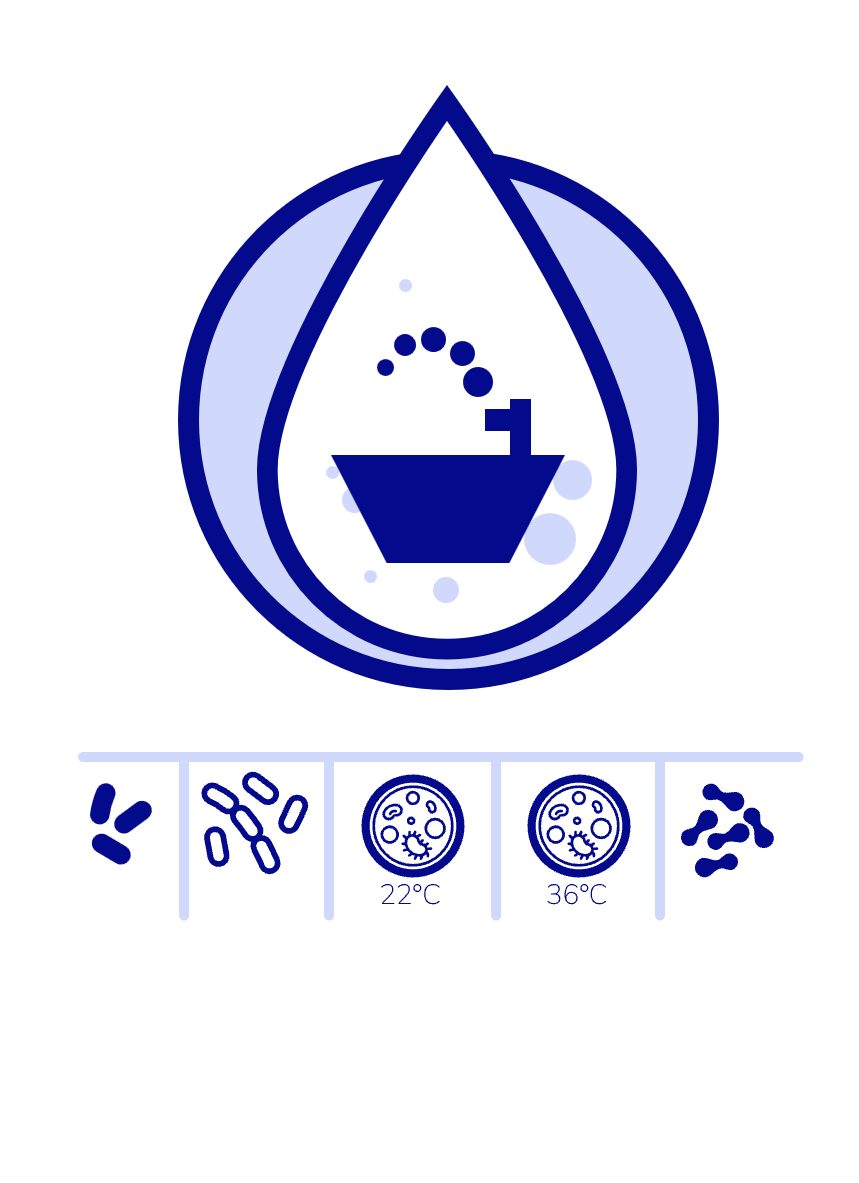
For regular testing of drinking water from water dispensers under the Drinking Water Ordinance.
We test the water for E. coli, coliform bacteria and enterococci. We also determine the colony count (CFU, colony-forming units), i.e. the amount of bacteria that grow at 22 °C and at 36 °C.
The analysis includes:
- E. coli
- coliform bacteria
- colony count 22 °C (CFU 22 °C)
- colony count 36 °C (CFU 36 °C)
- enterococci

Frequently asked questions
Do I have to have a water dispenser tested?
Public facilities must have the water from water dispensers tested regularly under the Drinking Water Ordinance. Testing also makes sense if you use the tap water in your own building for a water dispenser.
Why is testing worthwhile?
Water that stands for a long time offers bacteria good conditions to multiply (stagnation). If they multiply to high concentrations, drinking the water can make people ill. This applies in particular to risk groups such as immunocompromised persons, pregnant women, infants and small children.
Your enquiry
Do you need a different analysis or additional parameters? Get in touch and we will agree the scope with you.